
Actually, Its Meant To Protect You
Most property owners install CCTV once and assume the job is done. But a camera that's poorly placed, poorly maintained, or poorly configured can give a false sense of security while leaving real gaps wide open. Here's what to watch for:
1. Blind Spots at Entry Points
Cameras angled at walls, ceilings, or empty hallways instead of doors, windows, and cash areas are one of the most common installation mistakes we see. If your entry points aren't covered, your system isn't doing its core job.
2. No Night Vision Coverage
A large share of break-ins happen after dark. If your cameras can't capture clear footage at night, you're only protected for half the day.
3. Footage That Overwrites Too Quickly
Many systems default to short storage cycles, meaning footage gets erased before anyone reviews it sometimes before an incident is even reported.
4. No Remote Monitoring
If you can't check your cameras from your phone when you're away, you're relying entirely on someone noticing a problem after the fact.
5. No Maintenance Plan
Cameras go offline, lenses get dirty, storage drives fail. Without regular checks, you may not find out your system stopped working until you need it most and it isn't there.
The Bottom Line
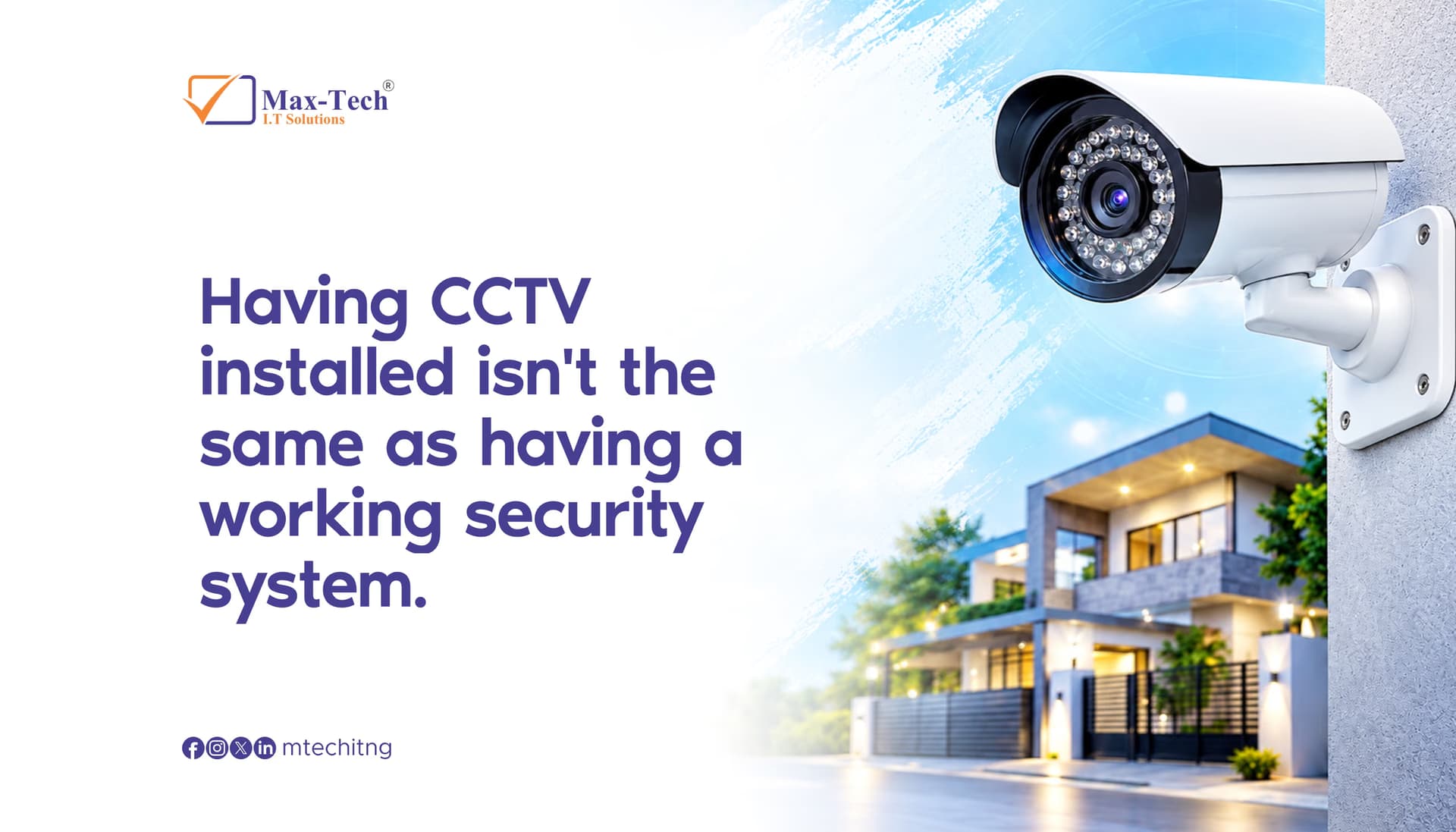
Having cameras installed isn't the same as having a working security system. A proper CCTV setup is designed around your specific blind spots, monitored consistently, and maintained over time.
If it's been a while since your system was reviewed, it might be worth a second look. Max-Tech I.T Solutions offers CCTV assessments to help you find and fix the gaps before they become a problem.