
What Is a DDoS Attack?
A Distributed Denial-of-Service attack occurs when an attacker uses multiple systems to flood a targeted server, website, or network with more traffic or requests than it can handle.
The objective is to exhaust available resources and prevent legitimate users from accessing the service.
Think of a busy store with a limited number of staff members. If hundreds of people suddenly crowd the entrance without intending to make purchases, genuine customers may be unable to enter. A DDoS attack creates a similar problem for digital services.
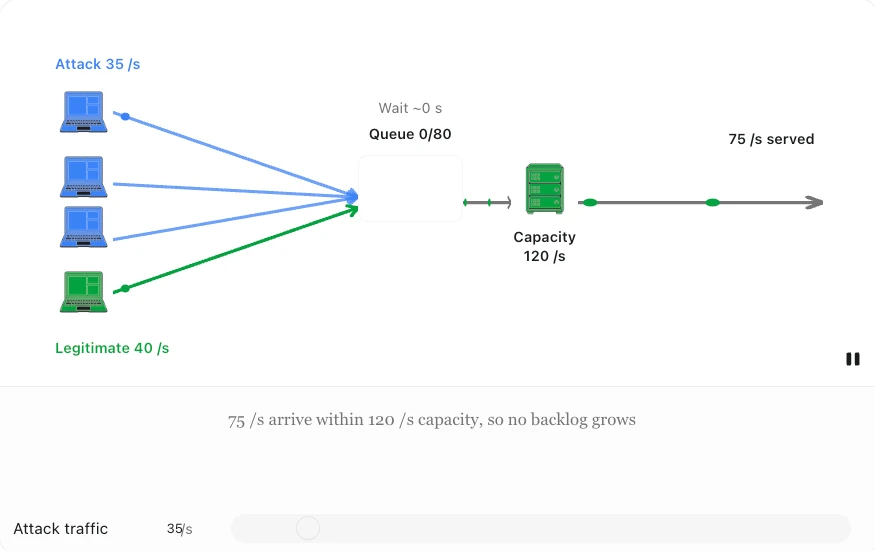
Unlike a traditional cyberattack that attempts to steal information or gain unauthorized access, a DDoS attack primarily targets availability. However, attackers may also use one to distract security teams while attempting other malicious activities.
Why Can a DDoS Attack Be So Cheap?
Cybercrime has developed an underground economy in which certain attack services and tools are advertised for relatively small amounts of money.
Some services marketed as booter or stresser services claim to offer on-demand traffic generation against a target. Although some legitimate network stress-testing services exist, criminal operators may sell access to infrastructure designed to disrupt third-party systems.
The cost varies depending on the attack's duration, scale, target, and the service being advertised. Consequently, there is no universal price for launching a DDoS attack.
The important point is that an attacker may not need to build an extensive technical infrastructure independently. Access to existing tools and services can lower the barrier to entry.
The financial cost of launching an attack may be small, but the damage to a business can be substantial.
The Real Cost Falls on the Victim
For businesses, the impact of a DDoS attack extends beyond a website becoming temporarily unavailable.
Potential consequences include:
1. Lost Revenue
If customers cannot access an online store, booking platform, or payment service, transactions may be delayed or lost entirely.
2. Damage to Customer Trust
Customers expect digital services to be available when they need them. Repeated outages can make a business appear unreliable, even when the disruption results from an external attack.
3. Operational Disruption
Employees may lose access to essential systems, customer support teams may face an increase in complaints, and technical staff may need to divert their attention to incident response.
4. Increased Recovery Costs
Depending on the attack, a business may incur additional expenses for technical investigations, emergency infrastructure upgrades, specialist assistance, and service restoration.
5. Reputational Damage
A prolonged outage can affect how customers, business partners, and prospective clients perceive an organisation.
For businesses that depend heavily on their websites or online applications, the cost of downtime can quickly exceed the amount an attacker spent to initiate the disruption.
Why Small and Medium-Sized Businesses Should Pay Attention
Cybersecurity threats are not exclusive to large corporations, banks, or government institutions.
Small and medium-sized businesses can also be affected, particularly when they rely on websites, cloud applications, online stores, remote access systems, and internet-connected business infrastructure.
A smaller organisation may have fewer resources dedicated to cybersecurity. It may also lack dedicated security personnel or a documented incident-response plan.
This does not mean every small business is equally vulnerable or likely to be targeted. It means that business size alone should not determine whether an organisation invests in protection against service disruption.
How Can Your Business Reduce the Risk?
No single security measure can prevent every DDoS attack. However, a combination of preventive controls, monitoring, and response planning can improve resilience.
1. Use DDoS Protection Services
Consider a reputable hosting provider, content delivery network (CDN), or cloud security service that offers DDoS mitigation. Confirm which types of attacks are covered and whether protection applies to your actual infrastructure.
2. Deploy a Web Application Firewall
A web application firewall (WAF) can help filter malicious HTTP traffic and protect against certain application-layer attacks. However, a WAF alone does not provide comprehensive protection against every type of DDoS attack.
3. Monitor Network Traffic
Establish a baseline for normal traffic patterns and configure alerts for unusual increases in requests, bandwidth consumption, or connection activity.
4. Review Your Hosting Infrastructure
Discuss capacity, traffic limits, scaling options, and DDoS response procedures with your hosting or cloud provider. Ensure that your origin server cannot be easily overwhelmed through a path that bypasses your protective services.
5. Prepare an Incident-Response Plan
Identify who should be contacted during an attack, how your hosting provider can assist, and which services require the highest priority for restoration.
6. Keep Your Systems Updated
Maintain supported software, secure network configurations, and properly configured access controls. These measures strengthen your overall security posture, although they do not independently prevent DDoS attacks.
7. Understand Your Provider's Protection Limits
Do not assume that every hosting plan includes comprehensive DDoS mitigation. Review your service agreement, traffic limits, escalation procedures, and any additional charges that may apply during an incident.
What Should You Do If Your Website Comes Under Attack?
If your website or online service suddenly becomes unavailable, avoid immediately assuming that it is a DDoS attack. Configuration errors, hosting failures, software problems, and legitimate traffic surges can produce similar symptoms.
Start by checking your hosting provider's service status and reviewing available server and network monitoring data.
If a DDoS attack is suspected:
- Contact your hosting provider or cloud infrastructure team immediately.
- Review traffic patterns and available security logs.
- Activate available DDoS mitigation controls.
- Avoid making rushed infrastructure changes without understanding their potential impact.
- Document the incident, its duration, and its effect on business operations.
- Review the incident afterward and address any weaknesses identified.
Early coordination with your infrastructure provider can help reduce disruption and improve recovery.
Cybersecurity Is a Business Investment, Not an Optional Expense
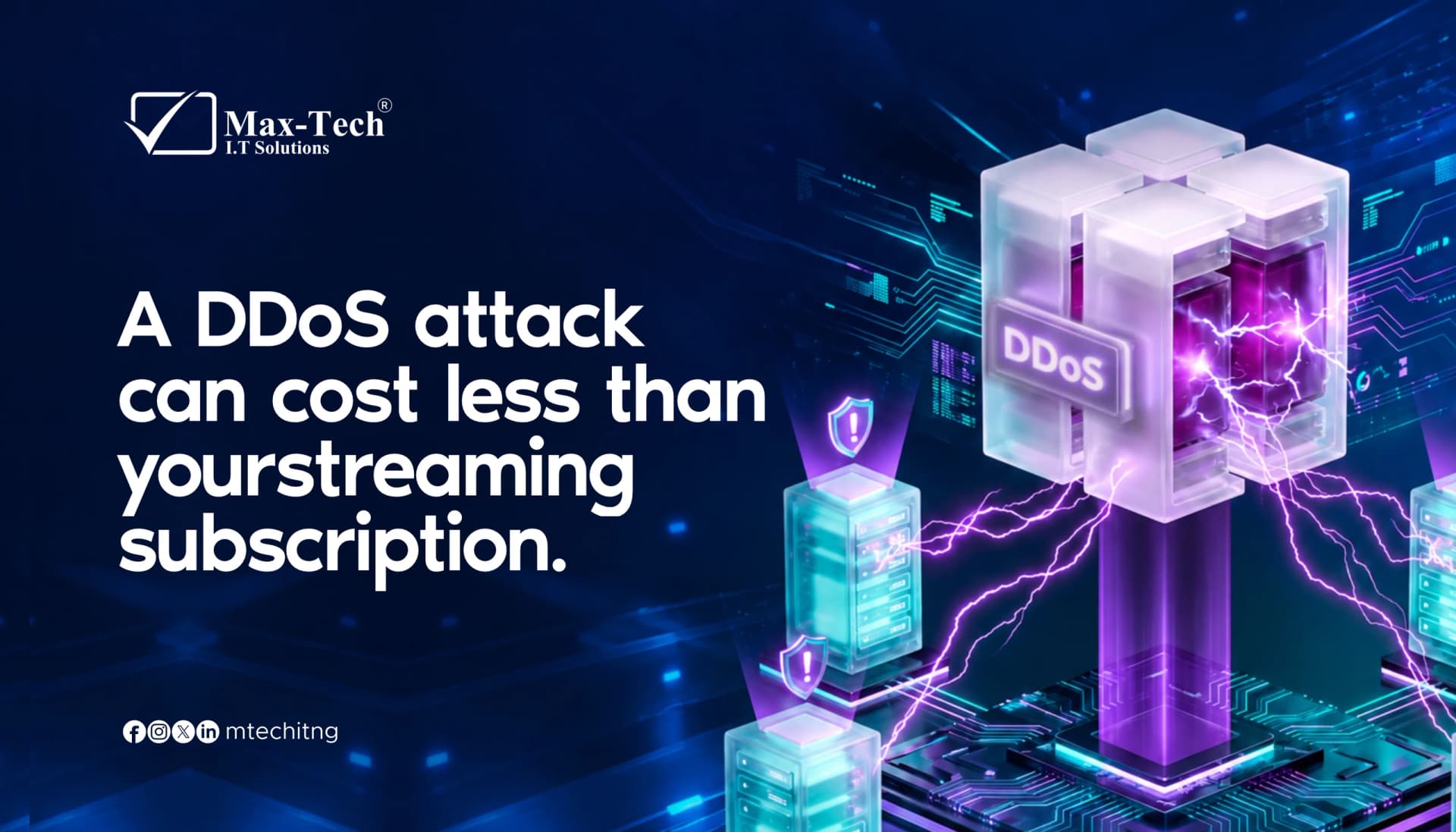
The idea that a DDoS attack could cost less than a streaming subscription is a reminder of how accessible certain cyberattack services have become.
But the price of an attack does not determine the seriousness of its consequences.
For businesses, the real concern is the potential loss of revenue, customer confidence, productivity, and operational continuity.
Investing in appropriate DDoS mitigation, reliable hosting, network monitoring, and incident-response planning can help organisations prepare for disruptions before they happen.
The question is no longer simply how much an attack might cost. It is how prepared your business is to withstand one.
Protect your digital operations before an outage puts your business at risk.
Contact Max-Tech to discuss your business's IT infrastructure, network security, and cybersecurity requirements.