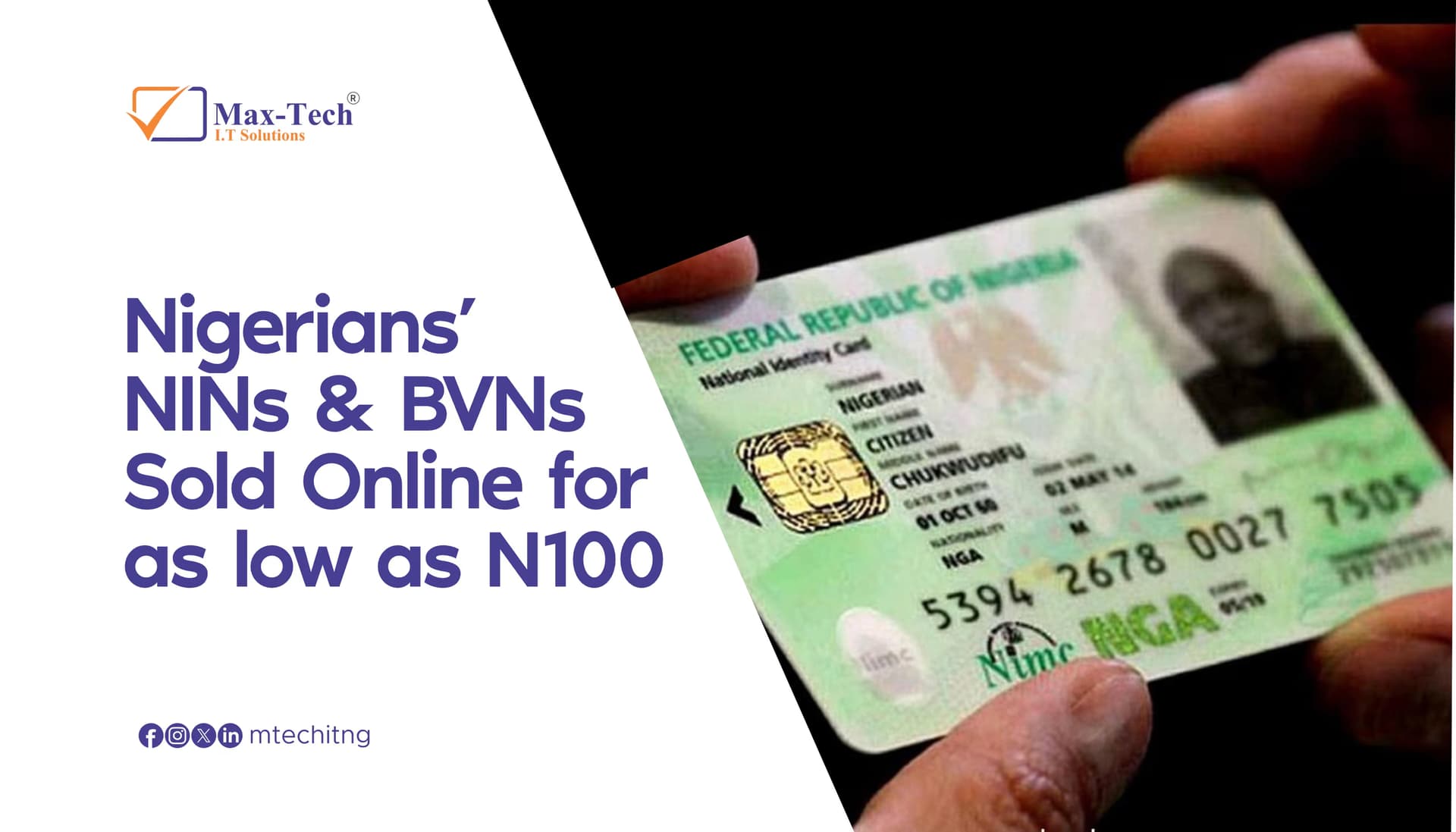

A disturbing claim has been circulating online alleging that Nigerians’ National Identification Numbers (NINs) and Bank Verification Numbers (BVNs) can be obtained online for as little as ₦100.
The claim has raised fresh concerns about identity theft, financial fraud and the security of Nigerians’ personal information.
However, the National Identity Management Commission (NIMC) has rejected the allegation, saying its National Identity Database has not been breached or compromised.
What sparked the controversy?
A video circulating on social media claimed that NIN and BVN information belonging to Nigerians was available for purchase online for as little as ₦100.
The video also made allegations that individuals were selling NIN information around NIMC offices in Lagos.
NIMC responded on September 24, 2026, describing the claims as “false and unfounded” and stating that the allegation had been recycled from an earlier report that the Commission had previously addressed
Why your NIN should be protected
Even though NIMC says its database has not been compromised, Nigerians should continue to treat their NIN and other identity information as sensitive.
NIMC states that the NIN connects an individual to their identity records and biometric information in the National Identity Database. It also specifically advises people to keep their NIN secure and not disclose it indiscriminately, including posting it publicly on social media.
Your NIN can be used in identity-related processes including banking, passport applications, driver's licences, taxation, pensions and other government services.
NIMC warns against suspicious websites and apps
NIMC has previously warned Nigerians not to submit their NIN or BVN to unauthorised applications, websites or individuals.
The Commission says Nigerians should use only official NIMC channels and clearly identifiable authorised partners when accessing identity-related services.
This is particularly important because criminals can use personal information for impersonation, social engineering, account takeover attempts and other forms of fraud.
Is NIN supposed to be sold?
No.
NIMC currently lists NIN enrolment for adults and minors as free.
The Commission also warns against people pretending to be NIMC representatives and charging Nigerians for services that should be obtained through legitimate channels.
What should you do?
If you encounter websites, social media accounts or individuals claiming to sell NIN or BVN information:
- Do not purchase the information.
- Do not send them your own NIN, BVN, OTP or banking details.
- Do not upload identity documents to suspicious websites.
- Avoid downloading apps from unofficial sources.
- Verify claims through official NIMC channels.
- Report suspicious activity to the appropriate authorities.
NIMC provides official customer-care and fraud-reporting contacts for identity-related issues.
The bigger cybersecurity lesson
Whether or not a particular database has been breached, the incident highlights an important cybersecurity principle: your personal information is valuable data.
NINs, BVNs, phone numbers, dates of birth and other identifying information should not be treated casually. A combination of seemingly harmless personal details can potentially be used to impersonate an individual or facilitate targeted scams.
For individuals and businesses, protecting sensitive information should therefore be part of everyday cybersecurity not something considered only after a breach.
Bottom line
The viral claim that Nigerians' NIN and BVN information is being sold online for ₦100 should not be treated as proof that NIMC's database has been hacked.
NIMC has publicly denied that its National Identity Database was breached or compromised.
Nevertheless, Nigerians should continue protecting their identity information and avoid giving NIN, BVN or other sensitive details to unauthorised platforms.
Your identity data is valuable. Treat it like a password, even when it isn't one.