
If you've ever said "I think I have a virus" when your computer starts acting up, you're not alone it's become the go-to phrase for anything that goes wrong with a device.
But technically, you might not have a virus at all. You could have spyware, ransomware, a trojan, or a worm. All of these fall under one umbrella: malware.
So what's the actual difference?
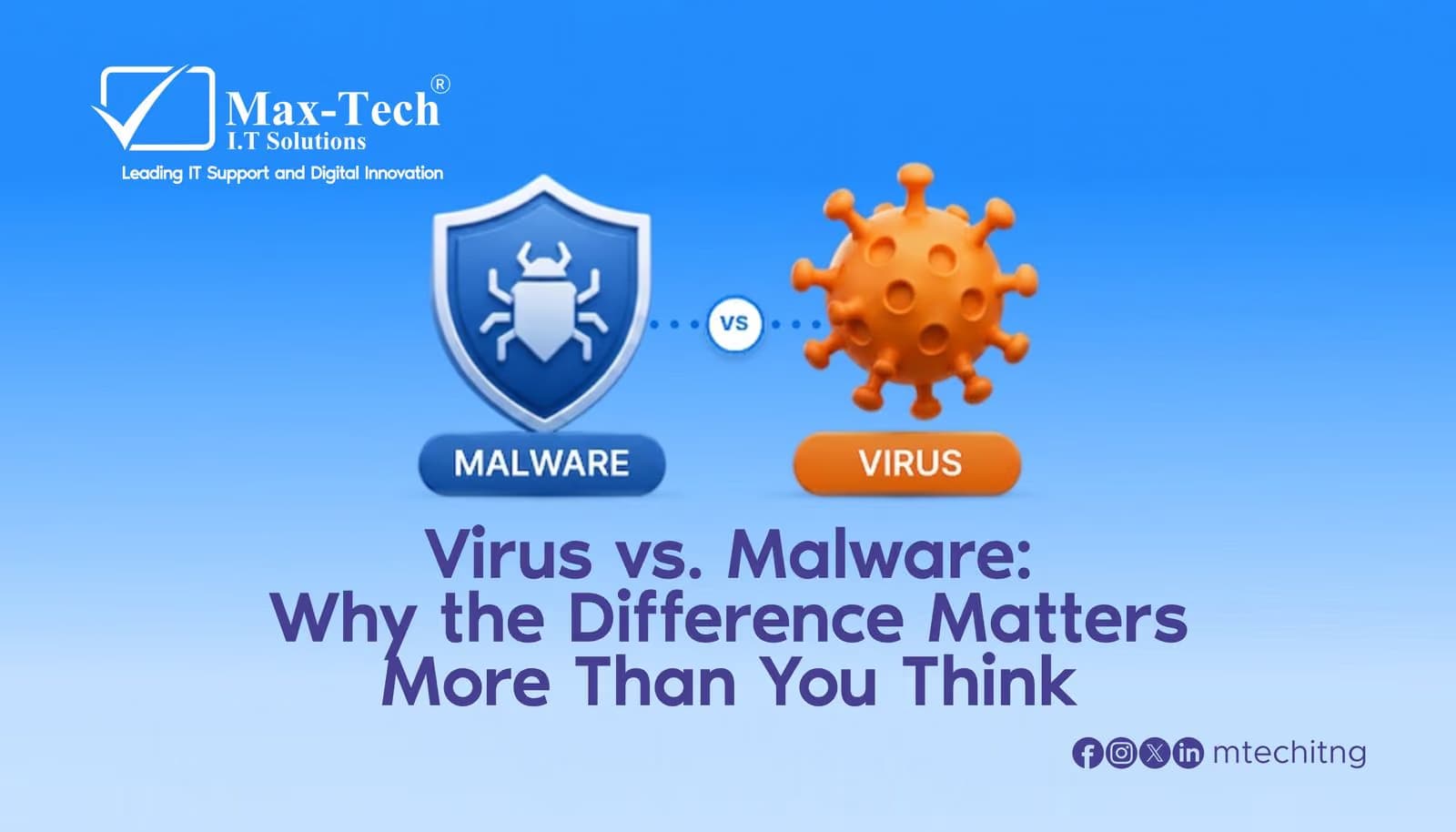
Malware is a broad term for any software designed to harm, exploit, or steal from a device or network. It's the category, not a specific threat. Under that category sit several types of malicious software, each behaving differently:
1. Viruses attach themselves to a file or program and spread when that file is opened or shared much like a biological virus needs a host to survive.
2. Worms spread on their own across networks without needing a file to be opened.
3. Trojans disguise themselves as legitimate software to trick users into installing them.
4. Spyware quietly monitors activity and steals information without the user's knowledge.
5. Ransomware locks up files or systems and demands payment to release them.
In short: every virus is malware, but not every piece of malware is a virus.
Why this distinction actually matters
This isn't just a vocabulary lesson. Different types of malware behave differently, spread differently, and require different removal strategies. A tool built to catch and remove viruses may completely miss spyware quietly logging keystrokes in the background, or fail to stop a worm spreading across a company network.
For businesses especially, misdiagnosing a threat can be costly.
Applying the wrong fix doesn't just waste time it can leave the real threat active, giving it more time to cause damage, steal data, or spread further into your systems.
How to protect your business properly
The right approach starts with correctly identifying what you're actually dealing with. That means:
1. Running proper diagnostics rather than assuming it's "just a virus"
2. Using security tools that cover the full range of malware types, not just one
3. Training staff to recognize the signs of different threats (a locked file looks very different from a slow, glitchy system)
4. Having IT support that can respond to the specific threat, not a generic one
At Max-Tech I.T Solutions, we help businesses correctly identify what's attacking their systems and apply the right fix not just a general one.
Cybersecurity isn't about having a solution. It's about having the right one.